
Skills for better community conversations.
Since 2006, the Positive Leadership Development Institute has delivered its Core “Who Am I As a Leader?” training. Later, it expanded to deliver its Communications and Governance training modules. Now, PLDI is excited to tell you about the launch of its newest training module: Facilitation. In this article we will outline:
- Why this new module was created
- About the pilot training sessions
- Results from the pilot session
- What to expect in the future
Why facilitation training?
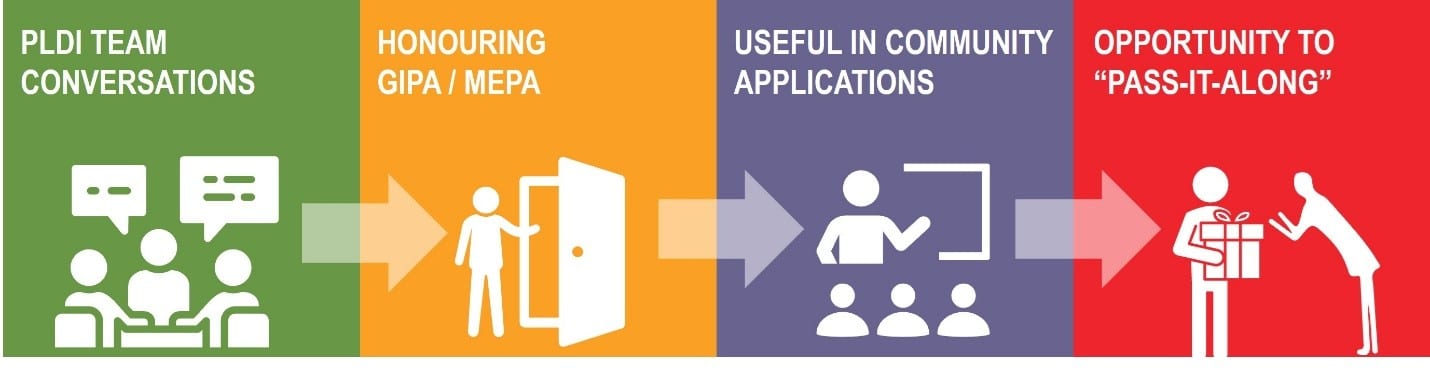
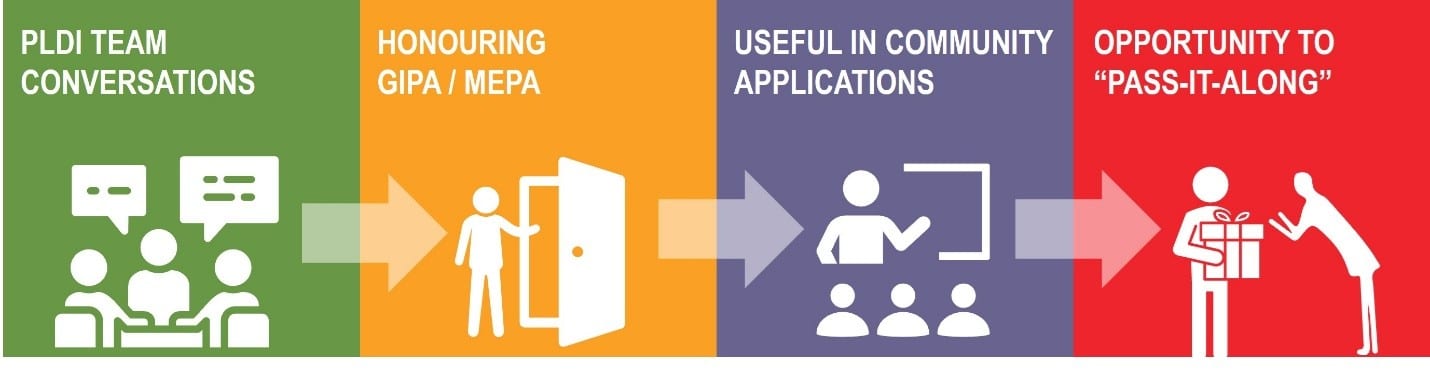
Of the many potential topics to offer as a new training, there were different reasons why facilitation was chosen. First, conversations about how to bring on new PLDI trainers among the provincial training managers and alliance coordinator frequently arose. Finding ways to further involve PLDI grads is important to the national team as a way of honouring the principles of greater and meaningful involvement of people living with HIV (GIPA/MIPA).
Facilitation is the act of guiding groups toward shared goals through making processes easier and enabling collaboration, often in workshops or meetings. And by offering grads the opportunity to build facilitation knowledge and apply facilitation skills, grads would be better able to help guide whatever aspect of community work is important to them. Think of all the useful applications of facilitation such as:
- Leading peer-based spaces
- Guiding meaningful conversations
- Bridging between communities and systems
- Supporting collective decision making
- Supporting action and follow-through
Having facilitation skills is like having the ability to “pass-it-along”. Our PLDI trainers play the role of creating training spaces for participants to build connections, skills, and confidence. What better way to give back to the HIV community than by sharing those skills and supporting others in becoming future facilitators. Through facilitation, we share our knowledge and skills to enable others to act.
About the pilot training sessions
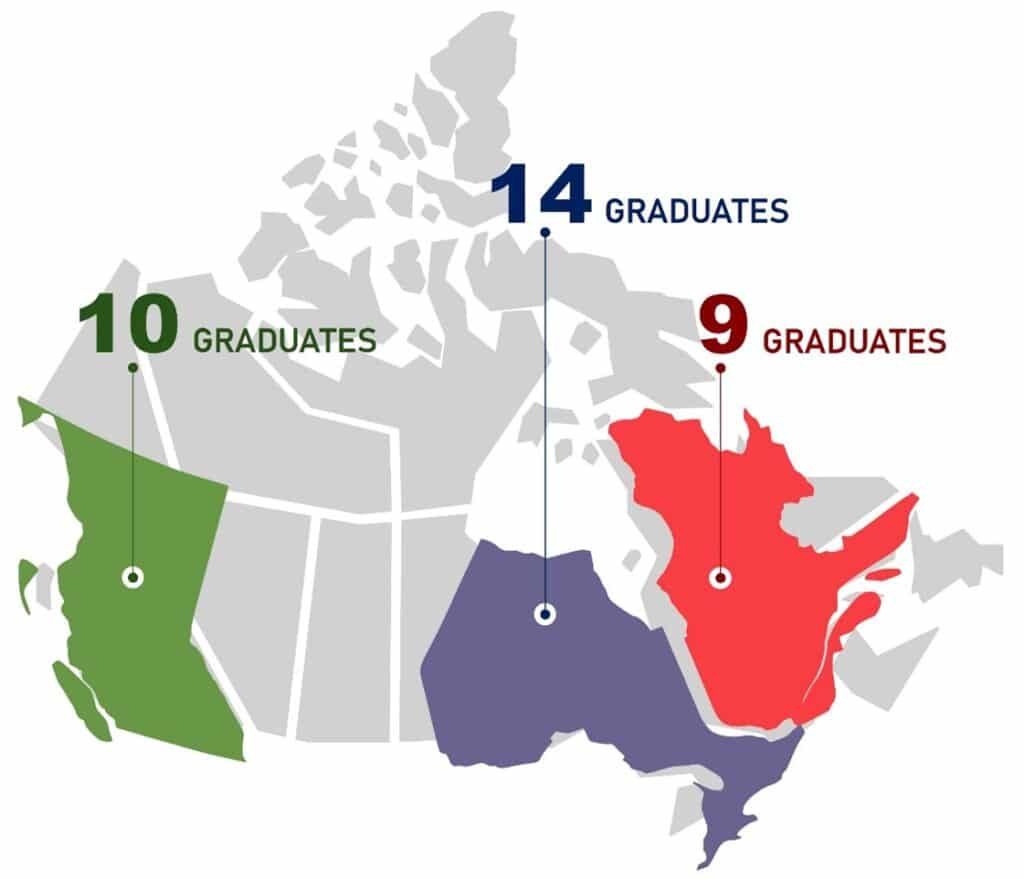
Mid-year 2025, all three PLDI training regions of Quebec, Ontario, and British Columbia delivered pilot sessions of the new Facilitation training. It was an innovative format of online and in-person to get the best of both worlds. Online training highlights geographical accessibility and at-home convenience while at the same time challenged participants to learn how to approach doing small group work in a virtual environment. Conversely, in-person training supports interpersonal connection and hands-on facilitation practice through face-to-face small group work.
The facilitation training curriculum contained a mix of theory presentation, discussion, and a healthy dose of opportunities to practice facilitation as individuals and in small groups. Facilitation topics and sections included:
- Understanding the function of facilitation
- Practical ways to engage an audience, handle conflict. and create safer spaces
- The five stages of group development
- The push-pull balance
- How to design a facilitated session
- Individual facilitation practicums embedded into the training’s flow of activities
- Small group collaborations & interactive presentations
Results from the pilot session
Evaluation of any given PLDI training provides valuable insight into what worked well and what could be improved. Evaluation is conducted by having participants complete a survey that aims to capture their personal experience of the training and what they gained & learned. Out of a total of 33 graduates, 27 people filled out the evaluation survey. Here are some of training evaluation results.

- Agreed or strongly agreed that the training will be useful for them and that it was clear and well-constructed.
- Agreed or strongly agreed that they achieved the learning objectives of the training.
- Rated the following as average or above average after the training:
- The importance of the value of your lived experience with HIV
- Sense of connection to a community of PLHIV
- Level to which you feel you can be a part of the community HIV response






What to expect in the future
PLDI continues to expand its training program to strengthen the leadership skills of people living with HIV. We look forward to offering the hybrid format facilitation training to Core training graduates in Quebec, Ontario, and British Columbia. The Facilitation training will likely be offered in each of the three provinces once every couple of years like in-person trainings for Communications and Governance. Because of the hybrid nature of online and in-person, the Facilitation Training is currently available to residents of BC, ON, and QC.
The Managers would like to extend their sincere thanks to the participating PLDI graduates who contributed to the initial brainstorming sessions, as well as to those who attended as participants. This meaningful pilot initiative would not have been possible without the commitment and contributions of the dedicated PLDI Trainers across all three provinces.
Keep an eye out for related news on the PLDI website or email announcements from PLDI managers when future Facilitation Training sessions are happening. will be made available for grads to apply.


Leave a Comment